Most independent used-car dealers are good at the two ends of the business. They know how to buy at Manheim, Copart, IAA or ADESA without overpaying, and they know how to close a customer on the lot. The money goes missing in the middle, between the moment the hammer falls and the moment the car appears on the website with a price.
That middle stretch is where the auction fees, the transport bill, the body shop invoice and three weeks of lot time all pile onto the unit, and almost none of it gets recorded against the car at the time. Here are the problems we hear most often from independent dealers, and how a dealer management system built for used-car operations fixes each one.
Problem 1: Costs never roll up per unit
Take a dealer buying 20 units a month. Each one arrives with a different hammer price, buyer premium, auction fee and transport charge, then goes through some combination of mechanical work, bodywork, tyres and detailing. In a spreadsheet, the hammer price usually gets entered. The premium and fees sometimes do. The transport invoice arrives a week later and lands in a different folder. The recon work is on the mechanic's clipboard or in a text message.
By the time the car sells, the "cost" column in the spreadsheet is the hammer price plus a guess.
How a DMS fixes it: every vehicle gets its own record from the day it is bought, and acquisition cost is itemised rather than lumped together: hammer price, auction fees, buyer premium, transport. The transport company, vendors and the bank that floored the car are tied to that vehicle record, so an invoice that arrives later has an obvious home.
Problem 2: Reconditioning is a black hole
Reconditioning is where good buys turn into bad sales. A car that needed "a little work" often needs a windscreen, two tyres, a brake job and paint on a bumper. If those costs are not attached to the unit as they happen, the dealer prices the car against the hammer price and gives away the margin without noticing.
The second issue is accountability. When recon is tracked loosely, nobody can see which shop section or which mechanic is absorbing the most hours or parts, or which jobs consistently run over.
How a DMS fixes it: reconditioning costs are logged against the vehicle by shop section and by mechanic. The dealer can see the recon total on each unit before setting the retail price, and can see across the whole lot where recon spend is going.
Problem 3: Nobody knows true profit until the accountant closes the month
The sales manager reports a car sold at a healthy gross. Six weeks later the accountant's month-end numbers show the lot barely broke even. The difference is all the cost that was never attached to the unit in time, and every pricing, buying and commission decision in between was made on incomplete information.
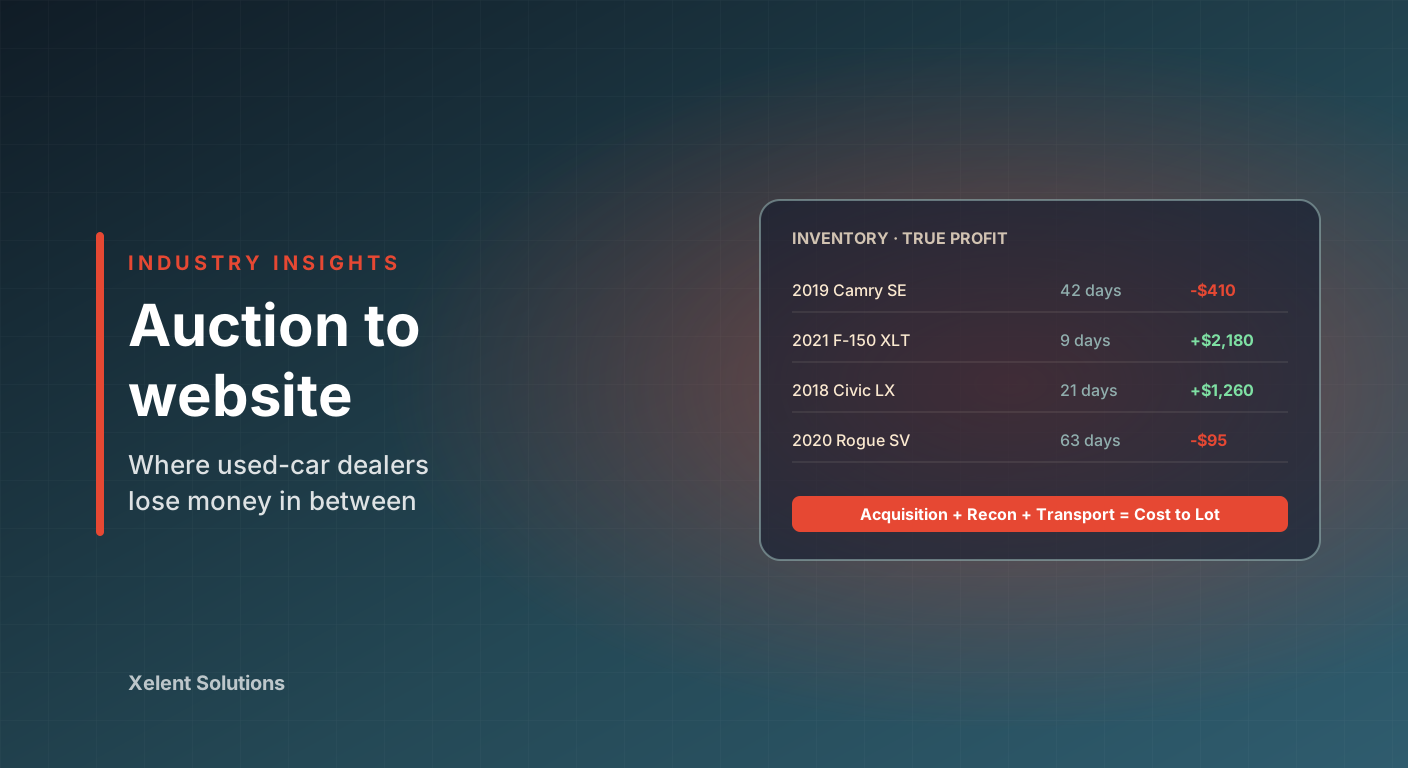
How a DMS fixes it: true profit per unit is calculated as sold price minus acquisition and reconditioning costs, and it is visible the moment the deal is written, not at month end. Profit columns are sortable, so the owner can see at a glance which units, which sources and which buyers are making money and which are not.
Problem 4: Days on lot are invisible
Every day a car sits unsold costs money: floor-plan interest, insurance, depreciation and the opportunity cost of the space. Dealers know this in principle. In practice, if the only record is a spreadsheet with a purchase date, nobody is looking at ageing until a car has been on the lot long enough to be embarrassing.
How a DMS fixes it: days on lot is a live figure on every vehicle. Ageing units surface on their own, so a price adjustment or a wholesale decision happens at thirty days rather than ninety.
Problem 5: The website shows cars you sold last week
For an independent dealer the website is the showroom most customers see first. Yet on many dealer sites the inventory is updated by hand, often by whoever has time at the end of the week. Sold cars stay listed, new arrivals are missing, photos lag, and the first conversation with a customer is an apology.
How a DMS fixes it: when inventory lives in one system, the vehicle record is the single source of truth. A car marked sold in the DMS is no longer presented as available, and a car that has cleared recon is ready to go live without a separate data-entry job.
Problem 6: Sales and marketing run on WhatsApp and phone calls
Leads arrive by phone, text, WhatsApp, Facebook Marketplace and walk-ins. Each salesperson keeps their own list. When a customer calls back and the original salesperson is off, nobody knows what was discussed or which car they were interested in. Follow-up depends on memory, and deals quietly die.
How a DMS fixes it: every sale is tied to a vehicle record and a seller, so the history of a unit, from acquisition to sale, is in one place rather than scattered across personal phones.
Problem 7: Commission arguments
When the profit on a unit is uncertain, commission on that unit is an argument waiting to happen. The salesperson remembers the gross they were quoted. The owner remembers the recon bill that came in after. Both are right, and both are unhappy.
How a DMS fixes it: seller commissions are calculated from the same true-profit figure the owner sees, with acquisition and recon already deducted. The number is the number.
Problem 8: Everyone sees everything, or nothing
In a spreadsheet, either the whole team can see what the dealer paid for every car and what every colleague earned, or the owner locks it down and the team works blind. Neither is good for the business.
How a DMS fixes it: role-based visibility means salespeople see what they need to sell, the shop sees what it needs to recondition, and the owner sees cost and profit across the lot.
Buy-here-pay-here and financed lots
Dealers who finance their own customers carry a further layer of complexity: the vehicle is sold but the money arrives over months, and the relationship with the bank or the note is part of the unit's story. A DMS built for used-car operations should handle BHPH and financed lots as part of the vehicle record, not as a separate spreadsheet.
Dealer Management Simplified
Most dealer management software was built for franchise stores with large back offices. Independent dealers need something lighter that still answers the only question that matters: what did this car actually make?
That is what we built carDMS to do. It itemises acquisition costs from Manheim, Copart, IAA and ADESA, tracks reconditioning by shop section and mechanic, shows days on lot and true profit per unit in sortable columns, calculates seller commissions from real profit, ties transport companies, vendors and banks to each vehicle, supports BHPH and financed lots, and controls who sees what through role-based visibility.
Dealer Management Simplified is not a slogan; it is the design brief.
If you recognise your lot in the problems above, take a look at carDMS or contact us and we will walk you through it with a sample of your own inventory.