Most small businesses think of their website as a one-off purchase. In practice, most of them are renting it. The money goes out every month, the business never builds equity, and the day the payments stop the website stops too.
That arrangement is so normal now that few owners question it. They should. The website is usually the single most important sales asset a small business has: it is where Google sends people, where customers check prices and opening hours, where enquiries start. Treating it as a rental is a strange way to handle something that valuable.
This article looks at the three ways small businesses usually get a website, what each one quietly costs, and why a self-hosted, licence-based model is a better fit for most of them.
Option one: the subscription builder
Hosted builders are easy to start with. Pick a template, drag a few blocks, connect a domain, done. The problem is everything that happens after launch.
Your content lives on their platform. Pages, blog posts, product listings, images, form submissions: all of it sits inside a system you do not control. Export tools, where they exist, usually give you a messy dump that no other system can import cleanly. Moving away means rebuilding.
Your SEO equity is tied to their stack. After two or three years, your site has rankings, backlinks and indexed URLs. If the builder changes its URL structure, drops a feature you depend on, or you decide to leave, that equity is at risk. Redirects are often limited or locked behind a higher tier.
The price only moves in one direction. Introductory plans are cheap. Then you need forms, or a shop, or to remove the platform's branding, or more storage, and each step is another tier. Annual price increases are routine. Over five years a "cheap" builder commonly costs more than a properly built site would have.
A failed card payment takes the site down. This one catches people by surprise. An expired card, a bank block on a foreign transaction, a missed renewal email, and the website shows a suspension notice to every customer who visits. The business did nothing wrong except not notice an email.
Option two: the agency rebuild cycle
The second route is hiring an agency or freelancer. You get a bespoke design and someone to call. The hidden cost is the cycle.
Agencies tend to build on whatever stack they prefer that year. When you want changes later, you depend on the same people being available and willing. When the relationship ends, or the technology ages, the next agency almost always recommends starting from scratch rather than inheriting someone else's code. Many small businesses are on their third or fourth full rebuild, each one paid for in full, each one resetting content and SEO work that was already done.
There is nothing wrong with hiring professionals to build your site. The problem is building it on a foundation that has to be thrown away every few years.
Option three: WordPress and the plugin pile
WordPress solved the ownership problem years ago: you host it, you own it. For many businesses it is still a reasonable choice. But a typical small-business WordPress site now runs twenty to forty plugins from different vendors to get a page builder, SEO, forms, caching, security, backups, a shop, redirects and translations.
Each plugin is a separate update, a separate licence, a separate potential conflict and a separate security surface. Most small businesses have nobody watching this. The site works until an update breaks the layout or an abandoned plugin becomes the entry point for a compromise. At that point the owner is paying a developer to untangle a system that was supposed to be free.
What a better model looks like
Strip the three options down and the requirements are clear:
- You own the site. It runs on hosting you control, and the content is yours in a format you can keep.
- Everything you need is in one product. A page builder, blog, shop and forms should not be four vendors. The SEO essentials, redirects, metadata and schema markup, should be built in, not bolted on.
- It keeps working if you stop paying. A licence should buy you updates and support, not permission for your website to exist.
- Updates are safe and backups are automatic. Signed updates and built-in backups mean the maintenance burden is handled by the product, not by whoever remembers to log in.
- It grows with you. Multi-language sites, add-ons and theme options should be available from day one rather than reserved for an expensive tier.
This is the self-hosted, licence-based model. You pay a yearly fee for the software, you install it on your own hosting, and you run it. If the licence lapses, the site stays online and the content stays yours. You simply stop receiving updates and support until you renew.
Compared to a subscription builder, you are converting rent into ownership. Compared to an agency rebuild, you are getting a foundation that can be maintained and extended for years. Compared to WordPress, you are replacing a plugin pile with one supported product.
Where Craftlio fits
Craftlio is Xelent's self-hosted website builder for small businesses, built around exactly this model. Every plan is the full product: page builder, blog, shop and forms, an SEO suite with redirects and schema, social feeds, add-ons and theme options, multi-language sites, signed updates and backups, and email support. Nothing is held back for a higher tier.
The plans differ only in how many sites you can run:
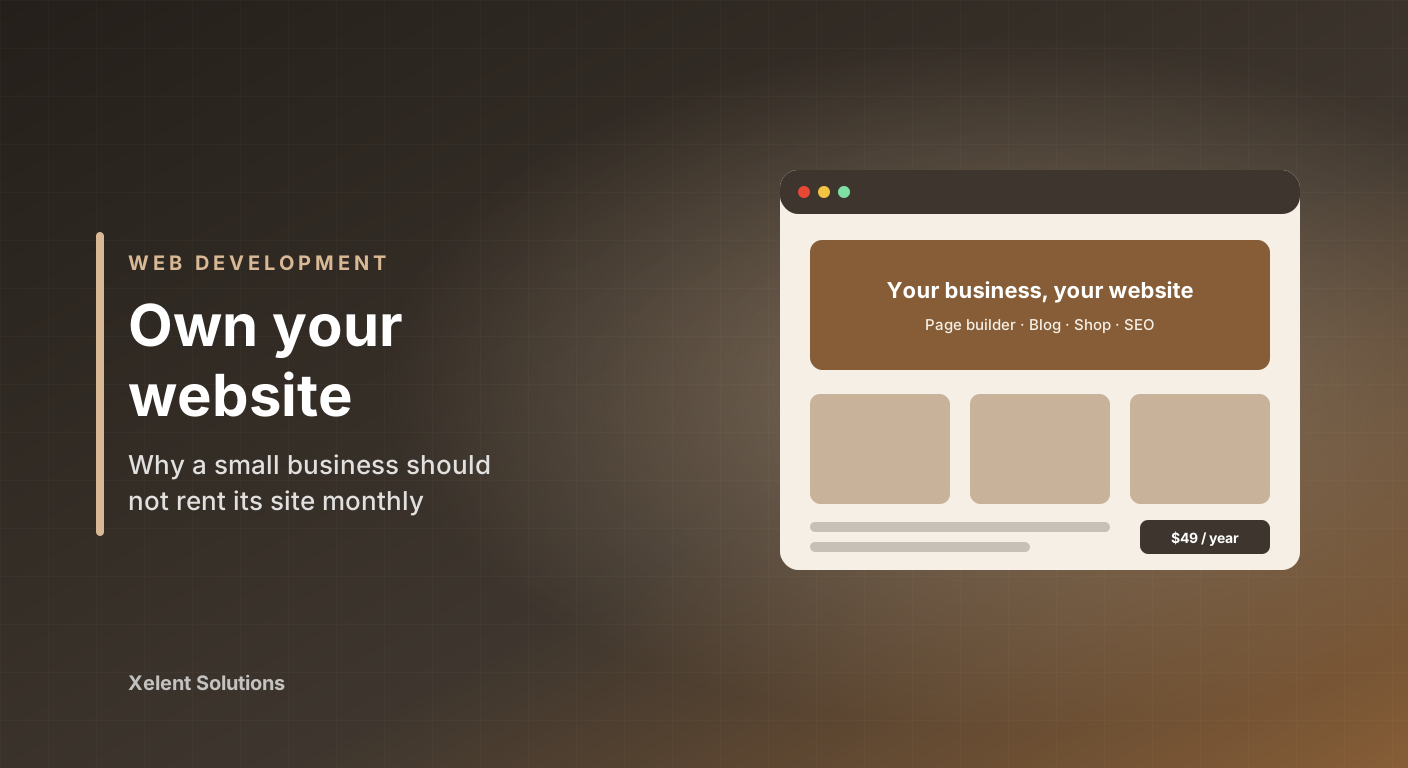
- Starter: $49 per year for one site. For a business with one website that wants to own it.
- Pro: $149 per year for up to five sites. For businesses running a few brands or locations.
- Agency: $399 per year for unlimited sites. For agencies and freelancers building for clients.
Because Craftlio is self-hosted, your site runs on your hosting, and it keeps running even if a licence lapses. You can read more or try it at craftlio.net.
If you do not want to build it yourself
Not every business owner wants to design pages, and that is fine. Xelent builds Craftlio sites for businesses that would rather hand the work over. The difference from the usual agency arrangement is what you end up with: a site you own, on software that will keep being maintained, that you or any future developer can edit without starting again.
If your current website is a monthly rent bill, or it is overdue for its third rebuild, it is worth a conversation. See what the product does at /craftlio, or contact us and we will look at what you have and what it would take to move.