Walk into almost any company with somewhere between 15 and 100 people and you will find the same setup, assembled one decision at a time.
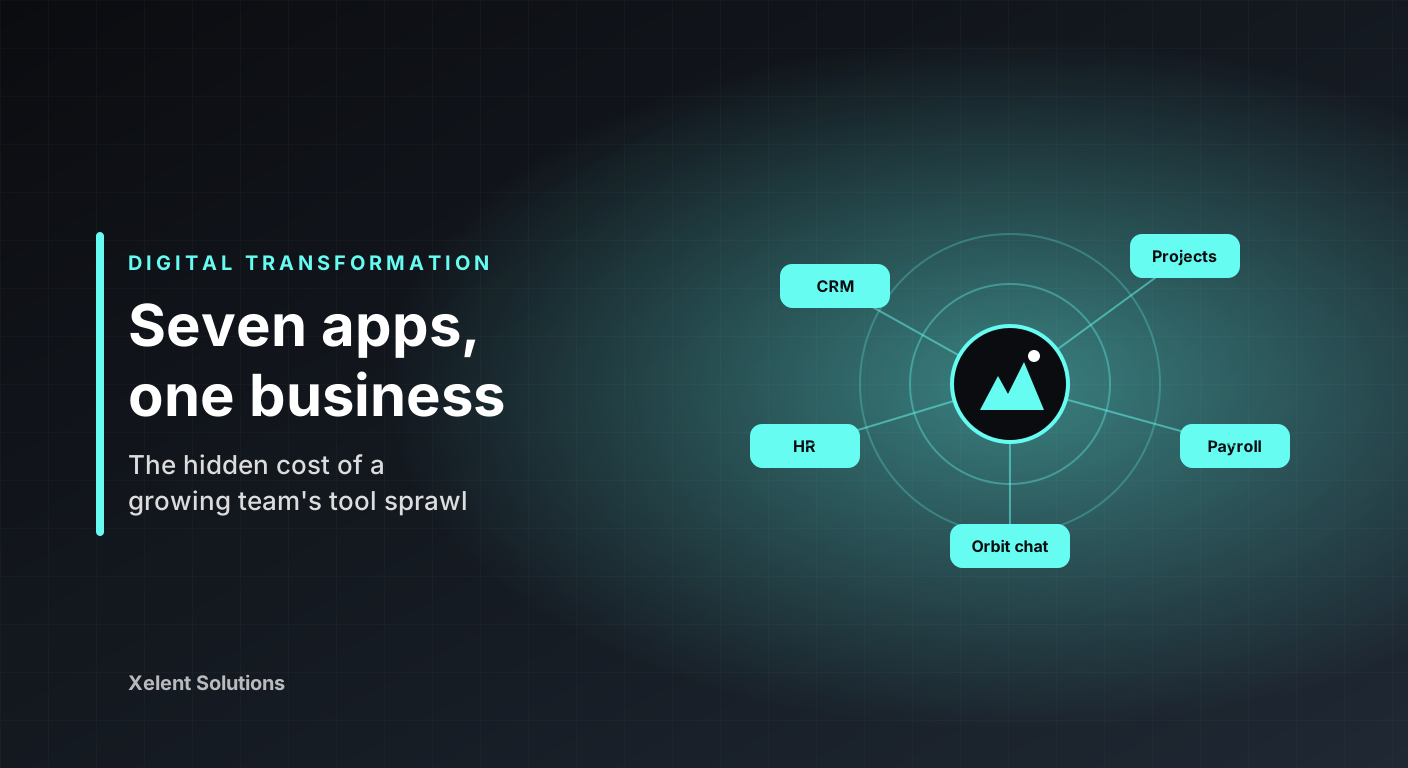
Sales tracks leads in a CRM. Delivery runs projects in a separate task tool. Attendance comes off a biometric device that exports a spreadsheet once a month. Payroll is an Excel file that one person understands. Internal communication is WhatsApp groups. Email sequences to prospects run on a third-party tool nobody else logs into. Meetings are booked by replying to emails until a time sticks.
None of these choices was wrong at the time. Each tool solved a real problem for one team. The cost shows up later, in the gaps between them.
What the gaps actually cost
Double entry. The same customer is typed into the CRM, then into the project tool, then into the invoicing sheet. The same employee exists in the biometric device, the payroll file and the leave register. Every re-entry is time, and every re-entry is a chance for the records to disagree.
Data that never meets. A deal closes in the CRM, but nobody creates the project, so the client waits a week for a kickoff that was already promised. An employee takes three days of approved leave, but the approval lives in a WhatsApp message and the payroll sheet pays them for a full month. The attendance export says one thing, the manager remembers another, and the payroll clerk spends two days reconciling at month end. These are not software failures. They are hand-offs between systems that do not know about each other.
Per-seat pricing that compounds. Each tool looks affordable in isolation. A CRM for the sales team, a project tool for delivery, an email tool for marketing, a scheduling tool for the founders, a chat tool once WhatsApp becomes unmanageable. Add them up across a 40-person company and the monthly total is often more than a single platform would cost, and it climbs every time you hire.
Nobody has one view. The owner wants a simple answer: which clients are we working for, what did we sell them, who is working on it, and are we paying the right people the right amount? Answering that today means opening five tools and a spreadsheet, and trusting that all of them were updated. In most companies they were not.
Onboarding and security. Every new hire needs accounts on six systems. Every departure needs those accounts removed. Shared logins creep in because managing access across seven tools is tedious. The company's customer list, project history and salary data end up spread across vendors with different retention policies and different levels of control.
The all-in-one alternative
The alternative is a single platform where the CRM, projects, HR, payroll, communication and scheduling share one database and one login. The appeal is simple: the deal that closes becomes the project without re-typing; the leave that is approved flows into payroll; the attendance record comes from the same system that runs the payslip; the conversation about a client happens next to the client's record.
The honest question is whether that integration is worth what you give up. It is worth being clear about both sides.
What you gain
- One record for each customer, employee and project. Enter it once, use it everywhere.
- Hand-offs that happen automatically. Deal won, project created. Leave approved, payroll adjusted. Form submitted, lead assigned.
- A single view of the business. Pipeline, delivery, people and payroll in one place, without reconciling exports.
- Predictable cost. One subscription instead of a stack that grows with every seat on every tool.
- Simpler control. One place to add a person, set what they can see, and remove them when they leave.
What you trade
- Less depth in each module. A dedicated CRM will have features a suite's CRM does not. The same is true for project tools and HR systems. If one function is your core competitive edge and you need the deepest tool available, a suite's module may feel thin.
- One vendor to depend on. You are concentrating risk. Choose a vendor you can actually talk to, with a clear path for your data.
- A migration. Moving seven tools into one takes effort and a few uncomfortable weeks. The payoff is real, but it is not free.
When a specialist tool is still the right call
An all-in-one platform is not the answer for everyone. Keep the specialist tool when a function is genuinely complex and central to how you make money: an outbound sales team of twenty running thousands of sequences a month, a software company with intricate engineering workflows, or a business whose payroll spans several countries with different statutory rules. In those cases, run the core on one platform and integrate the one specialist tool you truly need. The failure mode to avoid is the opposite: seven specialist tools where one or two would do.
For most companies between 15 and 100 people, the honest assessment is that none of their functions need best-in-class depth. They need the functions to work together.
Where TrangoHub fits
TrangoHub, formerly Orbix, is Xelent's business suite built for exactly this stage of company. The tagline is "Run the whole business from one place," and the modules are the ones that usually sit in seven apps:
- CRM and sales pipeline with deals, so sales has one place to work and the rest of the business can see what was sold.
- Projects with kanban boards, so delivery starts from the deal rather than from a forwarded email.
- HR and attendance, including GPS clock-in for field staff and biometric attendance for the office, so the attendance record is in the same system as everything else.
- Payroll that works from the attendance and leave already in the platform.
- Email sequences for prospects, run from the same contact records as the CRM.
- Automations that handle the hand-offs: when this happens, do that, without a person remembering.
- Meetings and booking, so a prospect or client picks a slot instead of trading emails.
- Web forms and landing pages that feed leads straight into the pipeline.
- Orbit, the built-in team chat, so conversations about a deal, a project or an employee happen next to the record instead of in a WhatsApp thread nobody can search later.
Because all of it sits on one database, the connections described above are not integrations to configure. They are how the system already works.
A practical way to decide
If you are weighing this up, three questions get you most of the way:
- How many hours a month go into moving data between tools? Count the attendance export, the payroll reconciliation, the project setup after each sale. If it is more than a day, the gaps are costing you a salary.
- What is your real monthly software bill across every seat on every tool? Most owners have never added it up. Do it.
- Which function, if any, genuinely needs a best-in-class specialist tool? Be strict. Usually the answer is one, or none.
If the answers point towards consolidation, take a look at TrangoHub or visit trangohub.com. If you would like help mapping your current tools onto one platform and planning the move, contact us and we will walk through it with you.