Most small businesses in Pakistan run their accounts in one of three places: a register (khata), Excel, or an accountant's head. All three work — until the business grows, a tax notice arrives, or the one person who understands the spreadsheet leaves. This guide covers what to actually look for when you decide it's time for real accounting software.
Start with the non-negotiable: double-entry
Plenty of "easy accounting apps" are glorified cash books — they track money in and money out, and nothing else. That is fine for a kiryana store; it fails the moment you need to know who owes you what, what your stock is worth, or whether you actually made a profit.
Double-entry bookkeeping is the standard for a reason: every transaction touches two accounts, so your books always balance and errors surface instead of hiding. If the software you're evaluating doesn't do real double-entry with a proper chart of accounts, it is a notebook with buttons.
The questions that matter for Pakistani businesses
1. Can it handle your business structure?
Many Pakistani business owners run more than one entity — a trading concern, a services company, maybe a family business alongside. Check whether the software supports multiple companies properly (separate books, one login) or whether you'll be paying for and juggling separate accounts.
2. Will it work the way your accountant works?
Accountants in Pakistan live on vouchers — cash payment, cash receipt, bank payment, journal vouchers. Software built for Western workflows often has no concept of them, which means your accountant fights the tool daily. Look for voucher-based entry, and ideally keyboard-first data entry — an experienced accounts officer entering hundreds of vouchers doesn't want to touch a mouse.
3. Does it produce the reports you'll actually be asked for?
At minimum: trial balance, profit & loss, balance sheet, party ledgers, receivables/payables aging, and stock reports. When a bank asks for financials for a loan, or FBR asks questions, "let me export some spreadsheets" is not an answer.
4. Is it ready for Pakistan's tax environment?
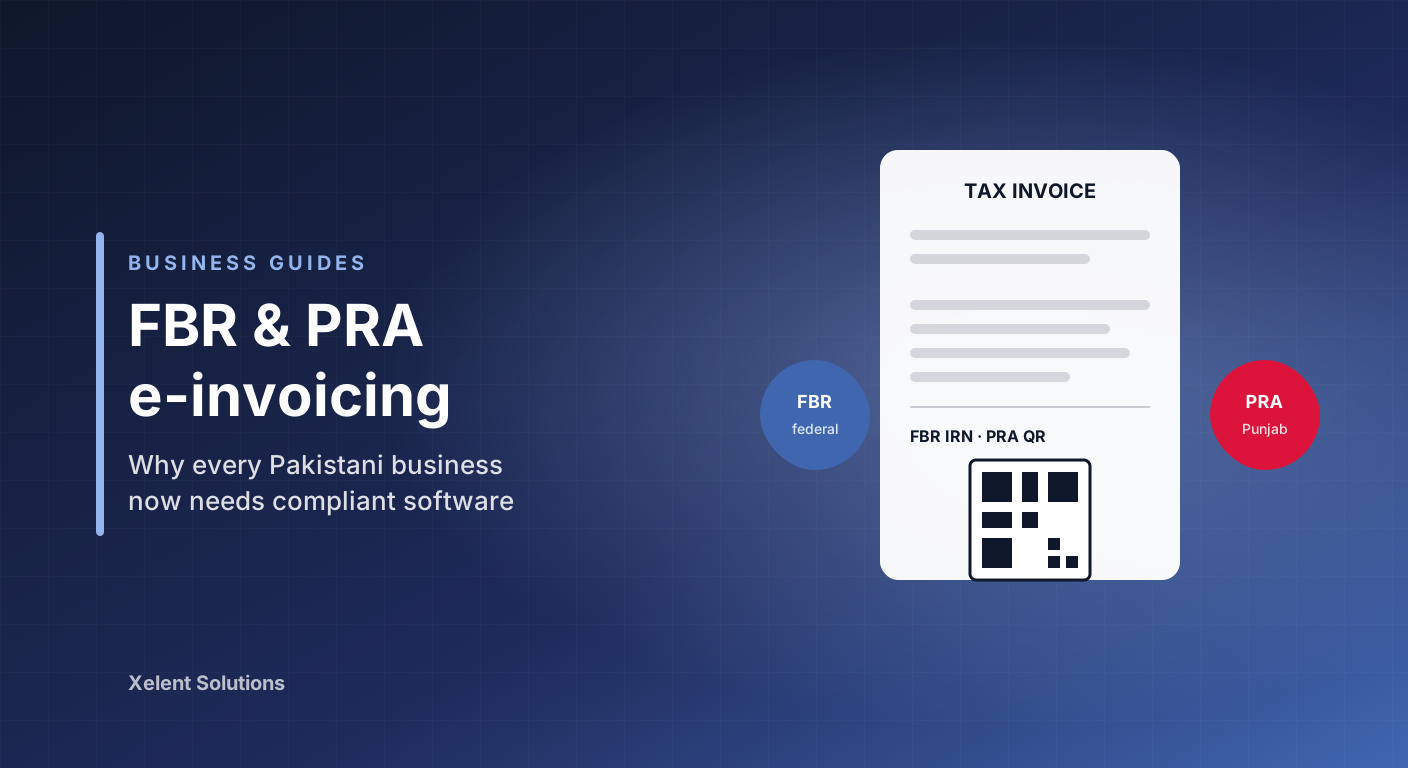
Sales tax handling, withholding entries, and — increasingly — FBR's digital invoicing regime are realities of doing documented business in Pakistan. Software with no concept of the local tax environment pushes all that work back onto you.
5. Can you import your existing data?
Your history lives in bank statements and old spreadsheets. Bank statement import alone saves hours of data entry every month and dramatically improves reconciliation discipline.
Cloud vs desktop, briefly
Desktop software feels private but dies with the PC it's installed on — no backups, no access from home, no multi-branch view. Cloud accounting gives you access anywhere, automatic backups, and painless updates. For most small businesses today, cloud wins; just confirm the vendor's data protection practices and export options (your data should never be hostage).
Where Ledgerly fits
We built Ledgerly after watching Pakistani businesses struggle with exactly the trade-offs above — imported software that ignores local workflows, or local software stuck in the desktop era. Ledgerly is a professional multi-company accounting system with true double-entry bookkeeping, a deep hierarchical chart of accounts, voucher-based keyboard-first entry, 20+ financial reports, and bank statement import — built by a Pakistani software house that understands how businesses here actually keep books.
If you're outgrowing Excel or an aging desktop package, take a look at Ledgerly or get in touch for a demo with your own sample data.
The 60-second evaluation checklist
- Real double-entry with a proper chart of accounts
- Multi-company support if you run more than one entity
- Voucher-based, keyboard-friendly entry your accountant will accept
- Trial balance, P&L, balance sheet, aging, and ledger reports out of the box
- Sales tax / withholding awareness, and a path to FBR digital invoicing
- Bank statement import
- Cloud access with reliable backups and data export
Anything that fails three or more of these will cost you more in workarounds than it saves in price.