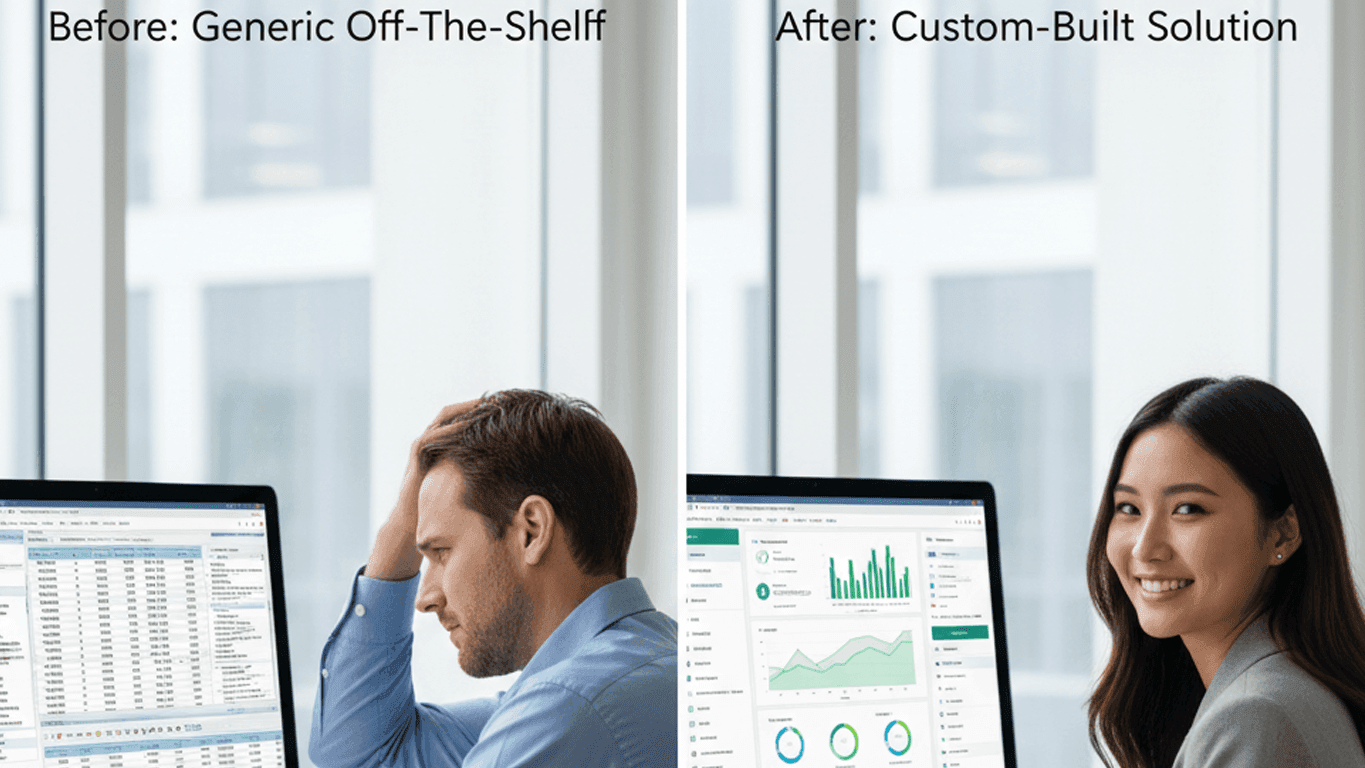
When businesses need software, they face a fundamental choice: buy an off-the-shelf product or invest in custom development. While pre-built solutions seem cheaper upfront, custom software often delivers superior long-term value.
The Hidden Costs of Off-the-Shelf Software
Licensing Fees Add Up
Most commercial software operates on subscription models. What starts as an affordable monthly fee can balloon into significant annual costs, especially as your team grows.
Customization Limitations
Off-the-shelf software is designed for the average user. When your business processes do not fit the mold, you end up changing your workflows to match the software — instead of the other way around.
Integration Challenges
Connecting pre-built software with your existing systems often requires expensive middleware, custom APIs, or manual workarounds. These integration gaps can create data silos and inefficiencies.
The Advantages of Custom Software
1. Perfect Fit for Your Business
Custom software is built around your specific workflows, terminology, and business rules. Every feature serves a purpose, and nothing is wasted on functionality you will never use.
2. Competitive Advantage
When your competitors use the same tools, differentiation becomes difficult. Custom software gives you unique capabilities that cannot be replicated by simply purchasing a license.
3. Scalability on Your Terms
Off-the-shelf solutions scale according to the vendor's roadmap. Custom software scales according to yours. Need to handle 10x more users? Your development team builds exactly what is needed.
4. Total Ownership
With custom software, you own the code, the data, and the roadmap. There is no risk of a vendor discontinuing a product or changing pricing structures.
5. Security
Custom applications can implement security measures tailored to your specific threat model, compliance requirements, and data sensitivity levels.
When Does Custom Software Make Sense?
Custom development is particularly valuable when:
- Your processes are unique and cannot be adequately served by generic tools
- You need deep integration with existing systems and databases
- Data security is critical and you need full control over your infrastructure
- You plan to scale significantly and need software that grows with you
- The software is core to your business and directly impacts revenue
Real-World Example
One of our clients in the retail sector was spending over $50,000 annually on multiple SaaS subscriptions for inventory management, customer tracking, and reporting. We built a unified custom platform that:
- Consolidated all functions into one system
- Reduced operational costs by 40%
- Improved employee productivity by 30%
- Provided real-time analytics previously unavailable
The custom solution paid for itself within the first year and continues to deliver value as the business grows.
Making the Decision
The choice between custom and off-the-shelf is not always black and white. Consider these questions:
- How unique are your business processes?
- What is the total cost of ownership over 3-5 years?
- How important is integration with existing systems?
- Do you need to differentiate through technology?
- What are your long-term scaling plans?
Conclusion
While off-the-shelf solutions have their place, businesses with unique requirements, growth ambitions, and a need for competitive differentiation should seriously consider custom software development. The upfront investment pays dividends in efficiency, flexibility, and long-term cost savings.
Get in touch to discuss whether custom software is the right choice for your business.