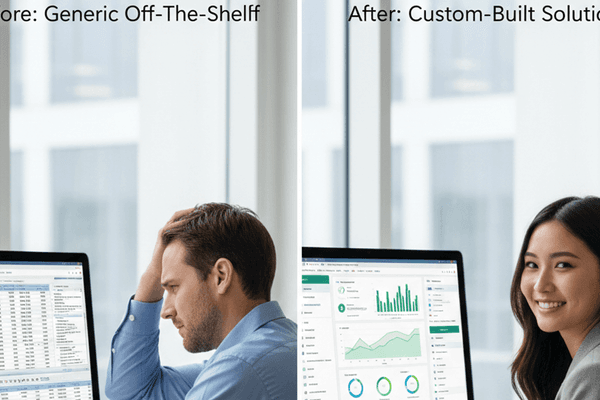
Full-stack development has become one of the most sought-after skills in the software industry. But what exactly does it mean, and why should businesses care? In this guide, we break down everything you need to know.
What is Full-Stack Development?
Full-stack development refers to the practice of working on both the front-end (client-side) and back-end (server-side) of a web application. A full-stack developer is proficient in multiple technologies across the entire software stack.
Front-End Technologies
The front-end is what users see and interact with. Modern front-end development typically involves:
- HTML/CSS for structure and styling
- JavaScript/TypeScript for interactivity
- Frameworks like Vue.js, React, or Angular
- Responsive design principles for mobile compatibility
Back-End Technologies
The back-end handles data processing, business logic, and server communication:
- Server-side languages like Node.js, Python, PHP, or Java
- Databases such as PostgreSQL, MySQL, or MongoDB
- API design using REST or GraphQL
- Cloud infrastructure on AWS, Azure, or Google Cloud
Why Full-Stack Development Matters for Business
1. Faster Time-to-Market
With developers who understand the complete stack, there is less communication overhead between separate front-end and back-end teams. This translates directly into faster delivery cycles.
2. Cost Efficiency
Instead of hiring separate specialists for each layer, full-stack developers can handle multiple responsibilities. This is especially valuable for startups and small businesses operating with lean teams.
3. Better Architecture Decisions
Full-stack developers see the big picture. They understand how front-end choices impact back-end performance and vice versa, leading to more cohesive and maintainable applications.
4. Flexibility and Adaptability
When priorities shift, full-stack developers can pivot between front-end and back-end tasks without bottlenecks. This agility is crucial in fast-moving markets.
Choosing the Right Technology Stack
Selecting the right technology stack depends on your project requirements, team expertise, and long-term goals. Here are some popular combinations:
| Stack | Best For |
|---|---|
| Vue.js + Node.js + PostgreSQL | Modern web applications |
| React + Python + MongoDB | Data-intensive applications |
| Angular + Java + Oracle | Enterprise systems |
| Next.js + Prisma + PostgreSQL | Full-stack JavaScript apps |
How Xelent Solutions Approaches Full-Stack Development
At Xelent Solutions, we leverage full-stack expertise to deliver comprehensive solutions. Our approach includes:
- Technology Assessment — We evaluate your requirements to recommend the optimal stack
- Agile Development — Iterative sprints ensure continuous delivery and feedback
- Quality Assurance — Rigorous testing at every layer of the application
- Deployment & Support — Seamless deployment with ongoing maintenance
Whether you are building a new product from scratch or modernizing an existing application, our full-stack developers bring the expertise to deliver results.
Conclusion
Full-stack development is not just a buzzword — it is a strategic approach that can significantly impact your project's success. By understanding both sides of the development equation, businesses can make better technology decisions and build more robust applications.
Ready to start your next project? Contact our team to discuss how full-stack development can work for your business.