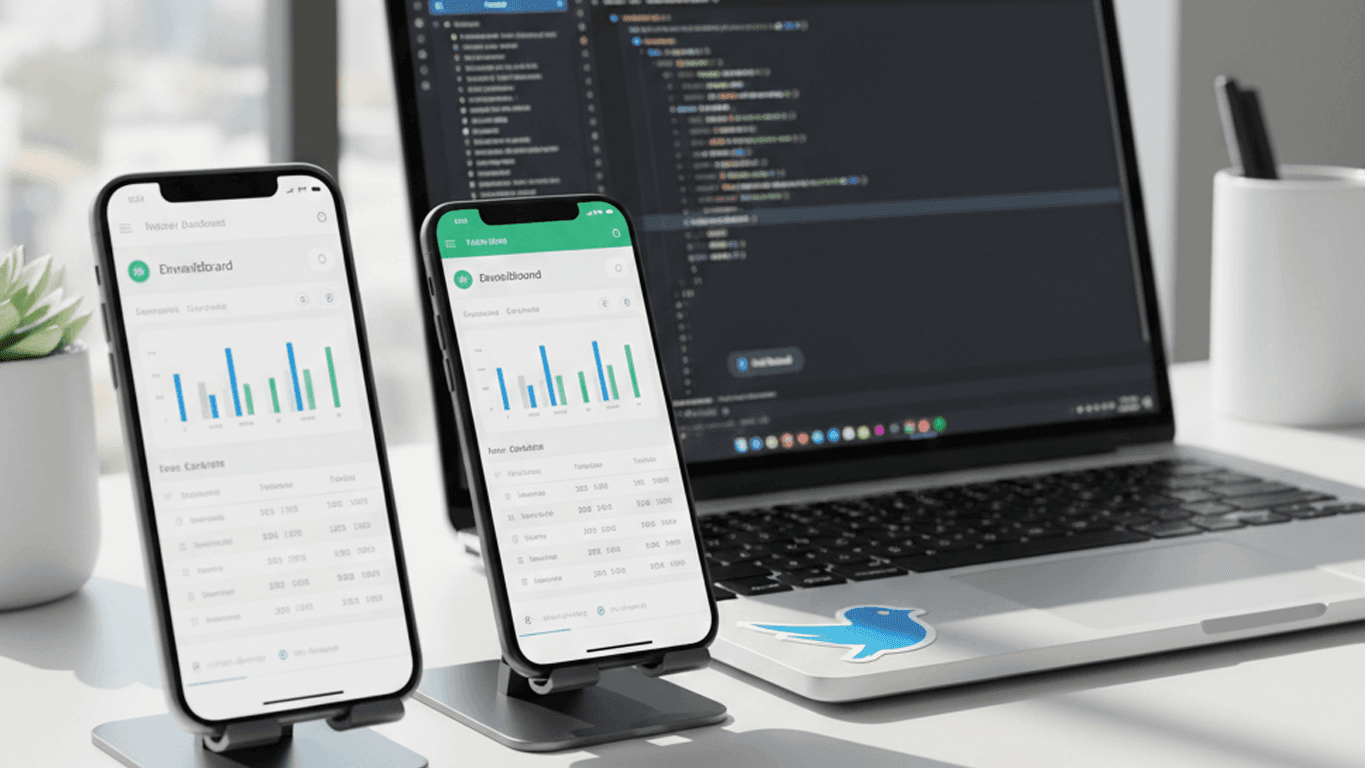
When Flutter launched in 2018, it was an exciting but unproven framework. Four years later, it has matured into a serious contender for enterprise mobile development. But is it ready for mission-critical business applications? Based on our experience, the answer is a confident yes — with some caveats.
What Has Changed
Maturity
Flutter's ecosystem has grown enormously. The pub.dev package repository now hosts thousands of production-quality packages. The framework itself has stabilized, with a predictable release cadence and excellent backward compatibility.
Multi-Platform Support
Flutter now supports not just iOS and Android, but also web, Windows, macOS, and Linux. While mobile remains its strongest platform, the ability to target desktop and web from the same codebase is increasingly valuable for enterprise applications.
Tooling
Developer tooling has improved significantly. Flutter DevTools provides profiling, debugging, and inspection capabilities that rival native development tools. Hot reload remains one of Flutter's strongest features for rapid iteration.
Enterprise Readiness Assessment
Performance
Flutter's custom rendering engine (Skia, now transitioning to Impeller) delivers consistent 60fps performance across platforms. For most enterprise applications — forms, data visualization, workflows — Flutter's performance exceeds requirements.
Security
Flutter supports platform-specific security features including biometric authentication, secure storage, and certificate pinning. The compiled nature of Dart code provides better protection against reverse engineering compared to JavaScript-based frameworks.
Integration
Enterprise applications need to integrate with existing systems. Flutter's platform channel system enables communication with native code for accessing platform-specific APIs. Most common integrations — push notifications, analytics, crash reporting — have well-maintained plugins.
Testing
Flutter provides excellent testing support at every level: unit tests, widget tests, and integration tests. The ability to run widget tests without an emulator dramatically speeds up the testing workflow.
Where Caution is Warranted
- Platform-specific features — Apps heavily dependent on platform-specific behaviors may need significant native code
- Large teams — Dart's smaller talent pool compared to Kotlin/Swift can make hiring challenging
- Web performance — Flutter web, while functional, does not yet match the performance and SEO capabilities of traditional web frameworks
Our Verdict
Flutter is ready for enterprise mobile development. We have successfully delivered multiple enterprise applications with Flutter and continue to recommend it for projects that benefit from cross-platform development. The framework's performance, developer experience, and growing ecosystem make it a strong choice for 2022 and beyond.